

Highlights and Offers

Visit and Explore - General Information

Flower Blossom Index
(Last update: 23 February)
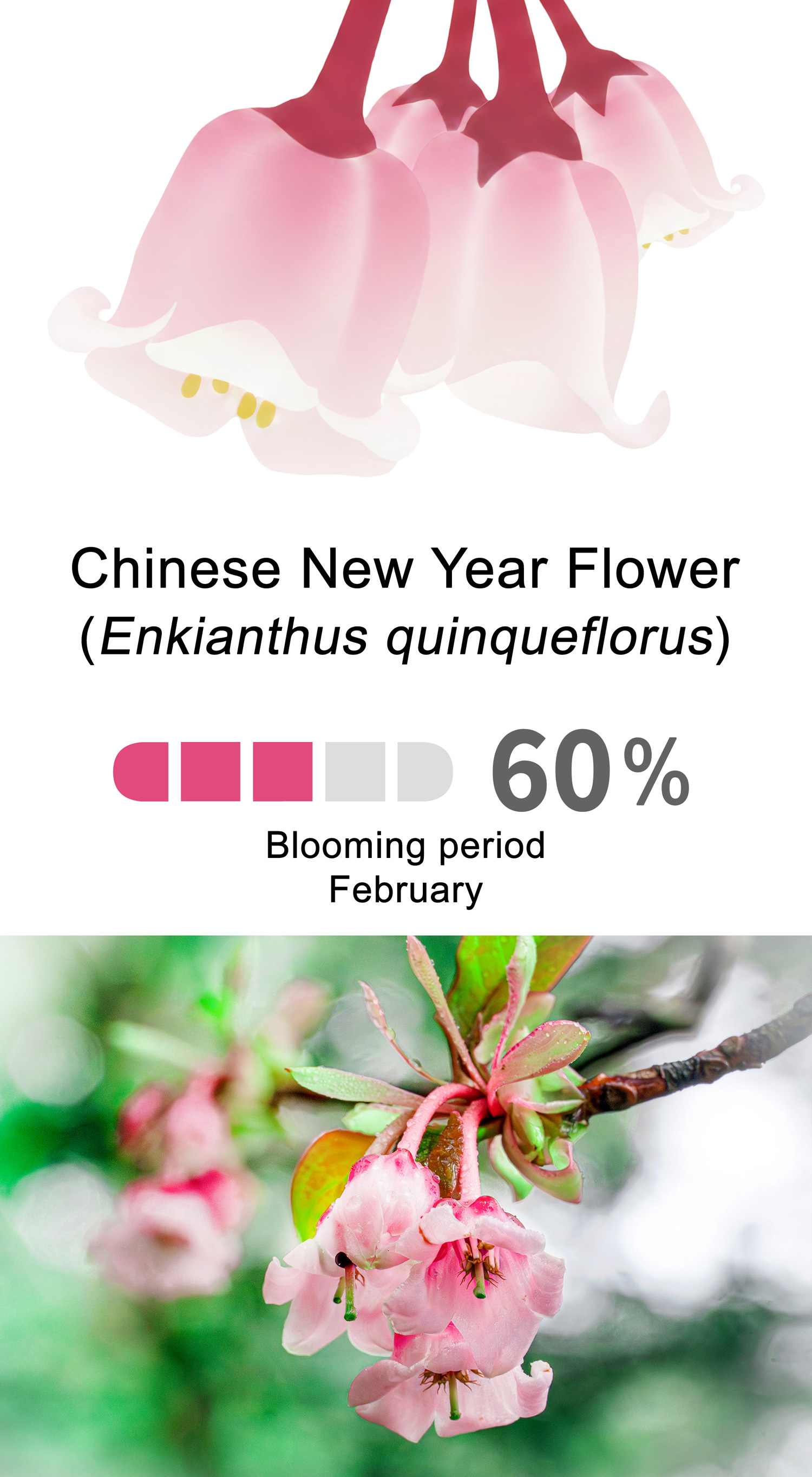
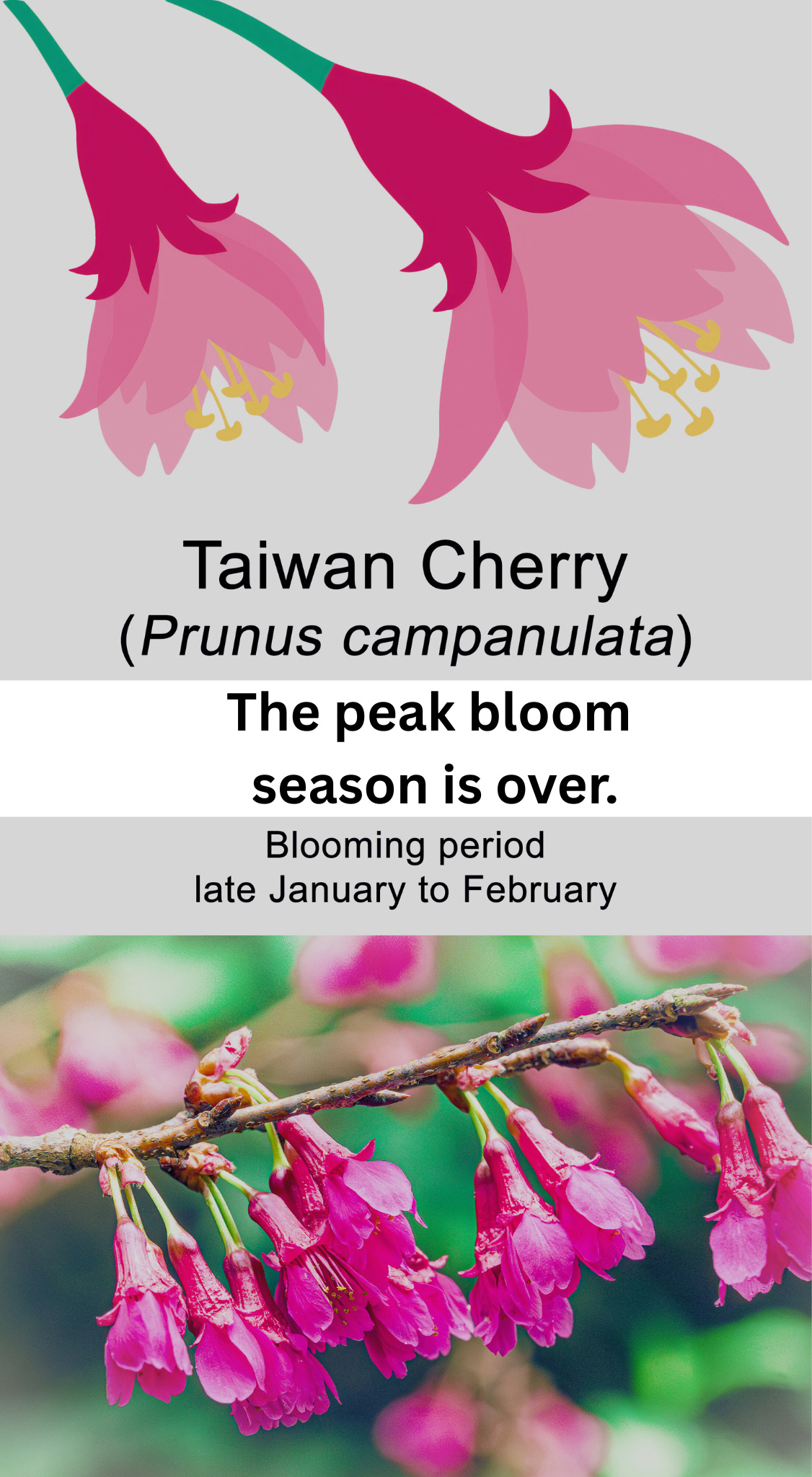
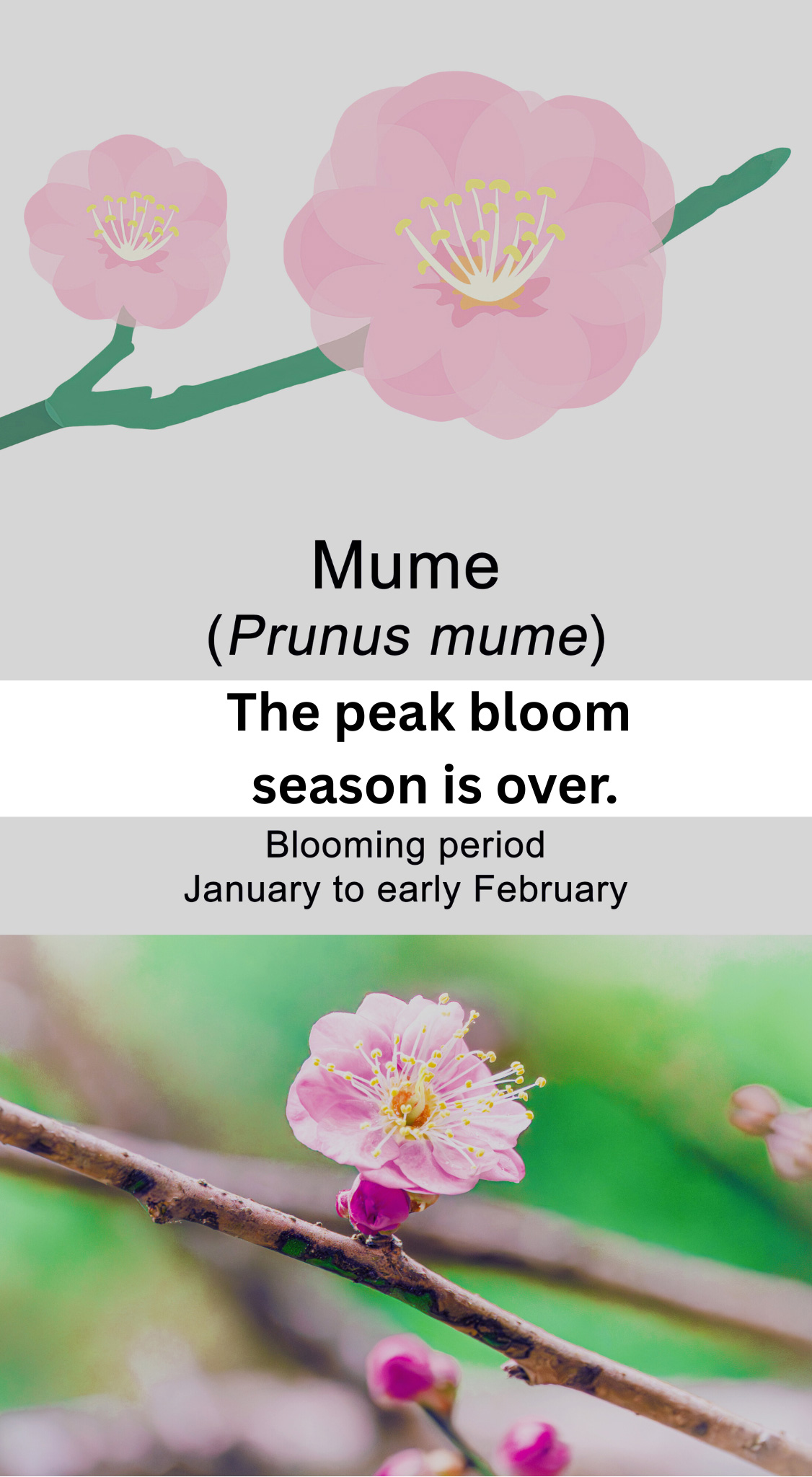
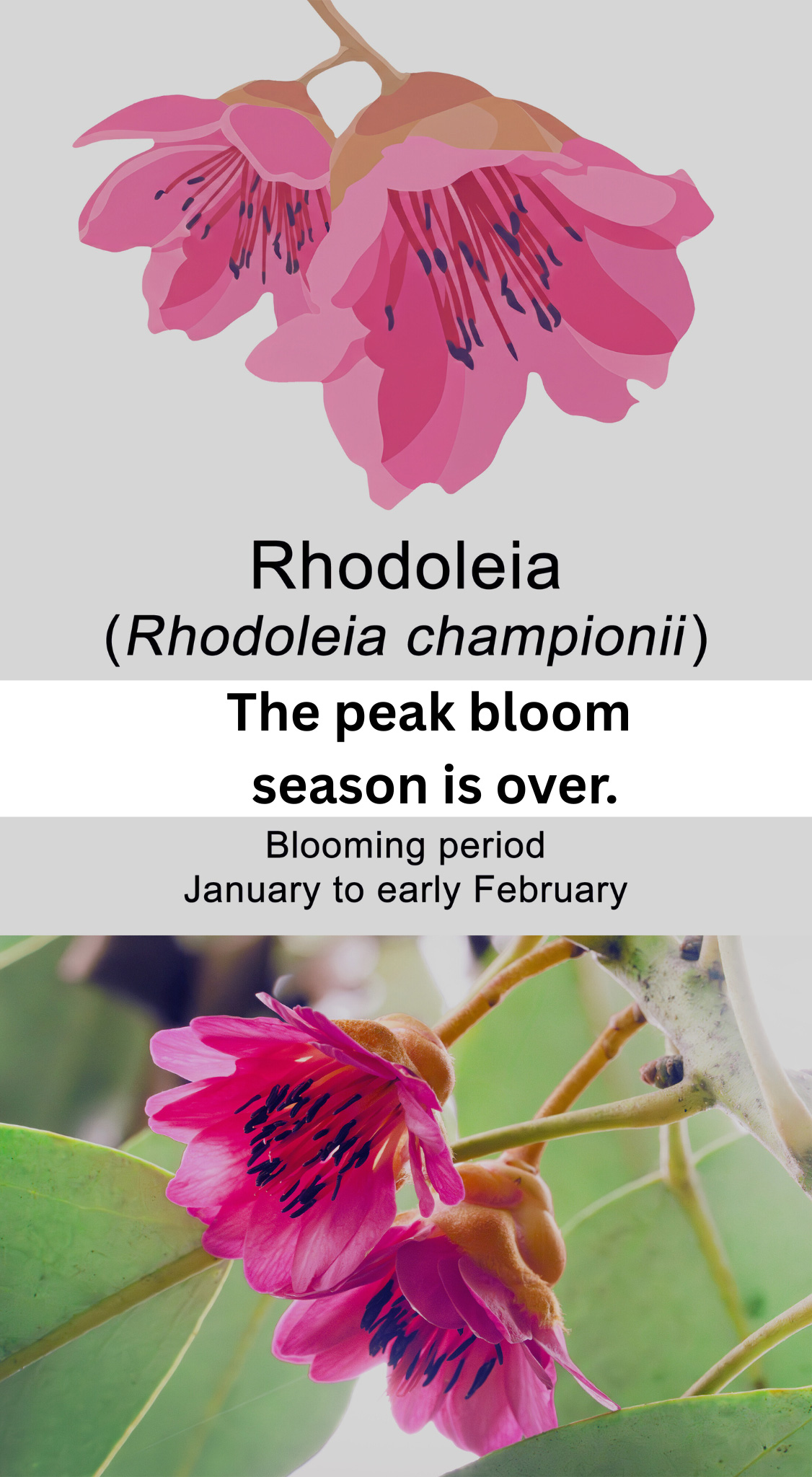
About these flowers

Mume Blossom: A Traditional Chinese Symbolic Flower
The Mume (scientific name: Prunus mume) belongs to the Rosaceae family, genus, is a small deciduous tree characterized by " hysteranthy" (flowers appearing before leaves) The species have light pink or white blossoms that bloom in late winter and early spring. Mume is highly adaptable, preferring warm and dry climates but also possessing cold-resistant properties.
Mume blossoms originated in the Jiangnan region of China. Since ancient times, they have spread to Korea, Japan, and other places, becoming an important ornamental flowering tree in East Asia. The mume blossoms are also introduced cultivated varieties in Hong Kong.
Since antiquity, the mume blossom has been regarded as a symbol of good fortune under Chinese culture. Together with pine and bamboo, it is known as one of the "Three Friends of Winter," symbolizing nobility, resilience, and tenacious vitality. Ancient people believed the mume possessed the "Four Virtues" (Yuan, Heng, Li, Zhen): "Its birth is Yuan, the origin of beginnings; its flowering is Heng, meaning smooth progress; its fruit-setting is Li, signifying harmony and benefit; its maturity is Zhen, representing steadfastness and purity."
Furthermore, its five petals correspond to the traditional wish for the "Five Blessings": happiness, prosperity, longevity, success, and peace.

Taiwan Cherry: Adding Vitality to Early Spring
The Taiwan Cherry (scientific name: Prunus campanulata), belonging to the Rosaceae family, is a small deciduous tree typically growing 3 to 8 meters tall. Native to southeastern China, Taiwan, and Vietnam, its clusters of light pink to peach-red bell-shaped flowers are highly ornamental. The Taiwan Cherries are also introduced cultivated varieties in Hong Kong. They thrive best in fertile, well-drained soil and in partially shaded environments. The blossom period lasts only a few weeks. The Taiwan Cherry is also an important food source plant for birds and bees.
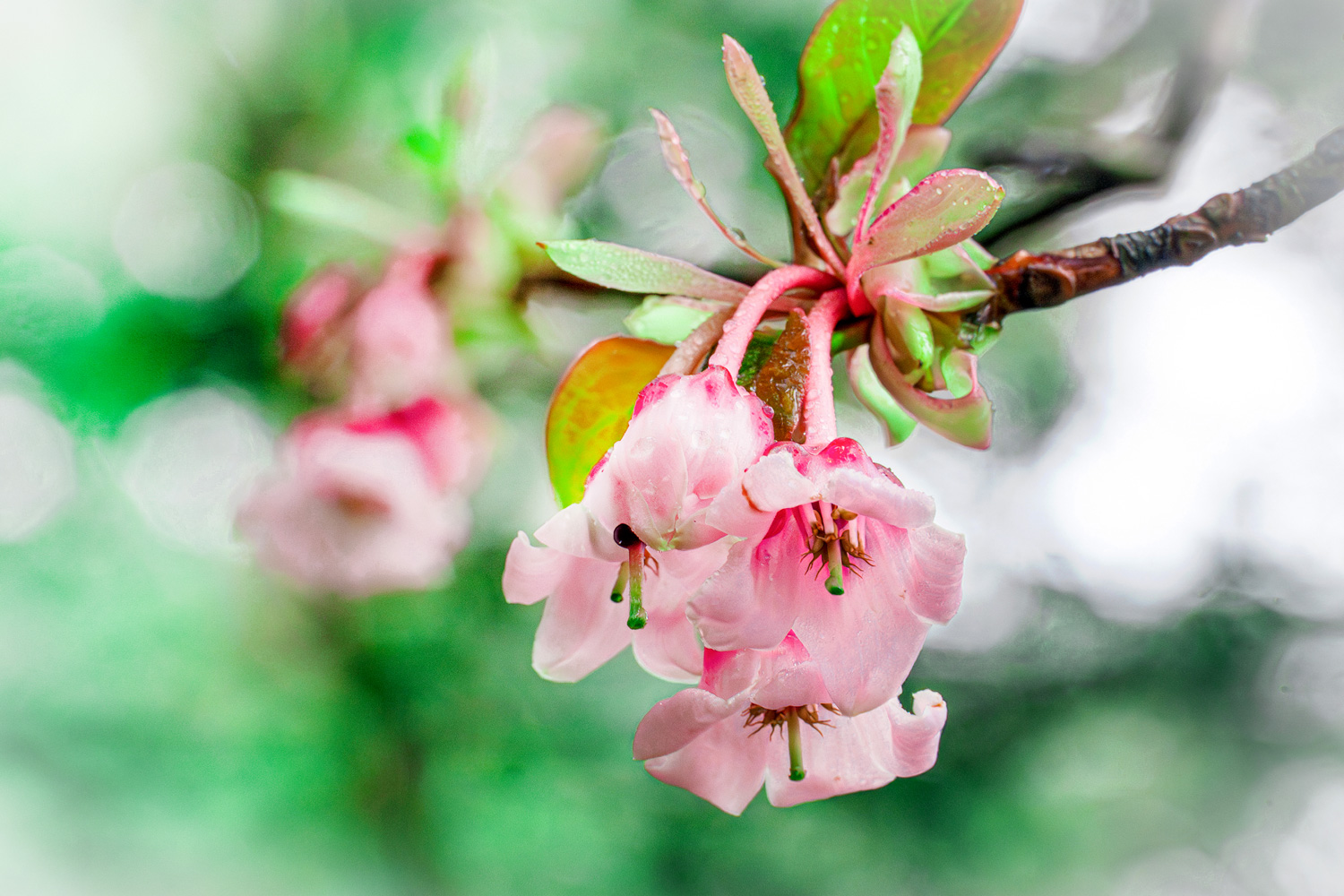
Chinese New Year Flower: A Protected Native Festive Plant of Hong Kong
The Chinese New Year Flower (scientific name: Enkianthus quinqueflorus) is a native plant of Hong Kong. It belongs to the Ericaceae family, genus Enkianthus, and is a perennial deciduous shrub or small tree, generally 1 to 3 meters tall. Its young leaves are pink, turning red as they age.
The flower buds are hidden within large bracts at the branch tips. When blooming, about 3 to 8 flowers gather in clusters. Each bell-shaped flower is about the size of a fingertip, with edges curling slightly outwards. The flowers are initially vermilion or light pink when they open, hanging and blooming in an elegant posture.
Its flowering period coincides with the Lunar New Year, hence its common English name "Chinese New Year Flower." Since ancient times, it has been a popular traditional festive flower. However, due to high demand for ornamental use, rampant cutting of wild plants occurred in earlier years. To protect this wild resource, the British Hong Kong government enacted legislation as early as 1913 prohibiting the picking, possession, and sale of this flower. As society gradually shifted to using plants like peach blossoms for New Year decorations, the survival pressure on wild Enkianthus lessened. Now, the Chinese New Year Flower remains protected under Hong Kong Law, Chapter 96, the Forests and Countryside Ordinance; illegal collection or sale is an offense.

Rhodoleia: The King of Hanging Bells
Rhodoleia (scientific name: Rhodoleia championii) is a native plant of Hong Kong. It is an evergreen tree that can reach up to 12 meters tall. Native to Hong Kong, central and western Guangdong, it is also distributed in places like Myanmar and Vietnam. Its bright red flowers are exceptionally ornamental.
Rhodoleia is listed in Hong Kong's Rare and Precious Plants and rated as Vulnerable (VU). This species is protected under Hong Kong Law, Chapter 96A, the Forestry Regulations. Due to its hanging, bell-like flower clusters and being the species with the largest flowers within its genus, it is called the "King of Handing Bells." There are several wild Rhodoleia trees in KFBG and the blossom period is only a few weeks. Please cherish this rare bloom and seize the opportunity to come and admire it.
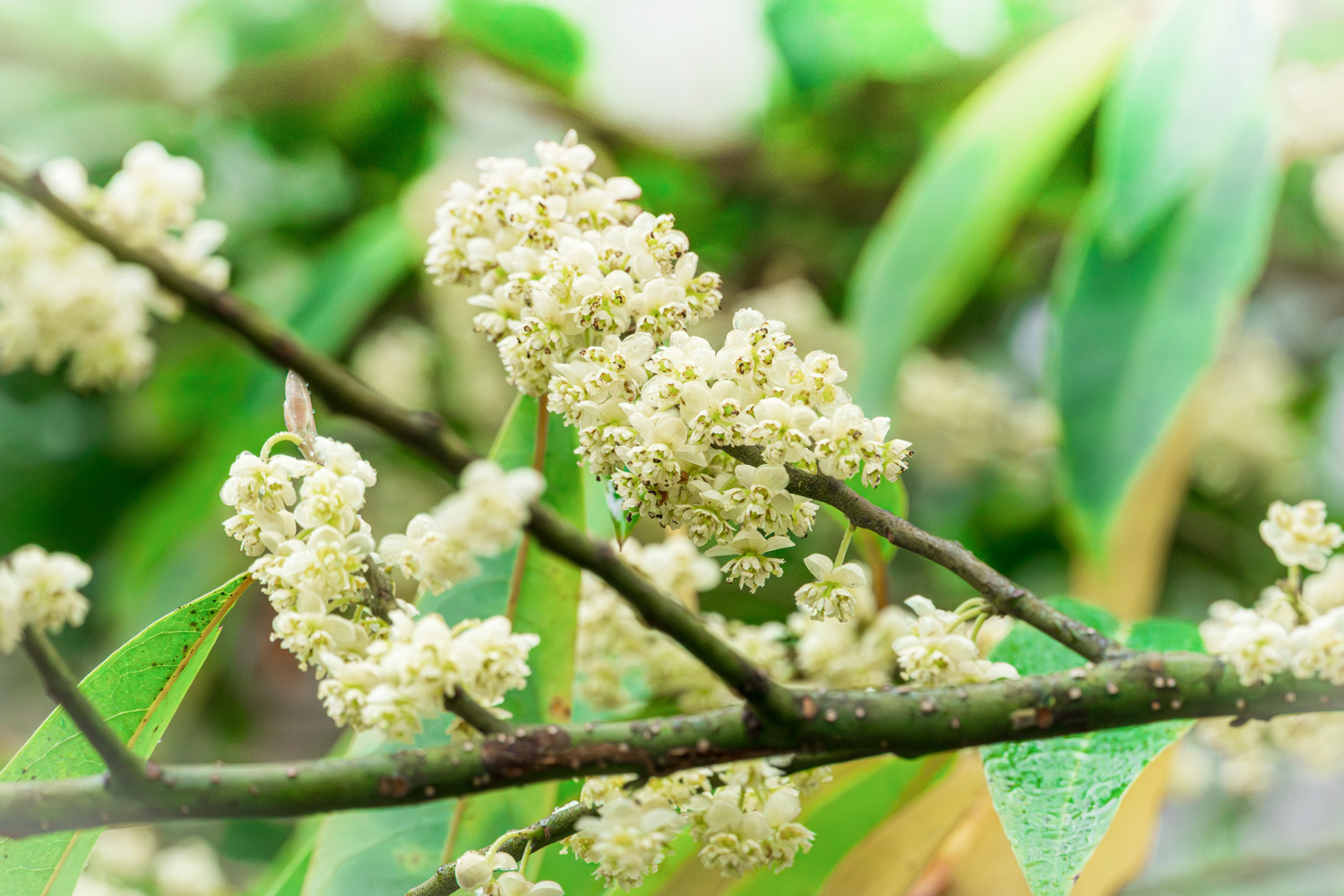
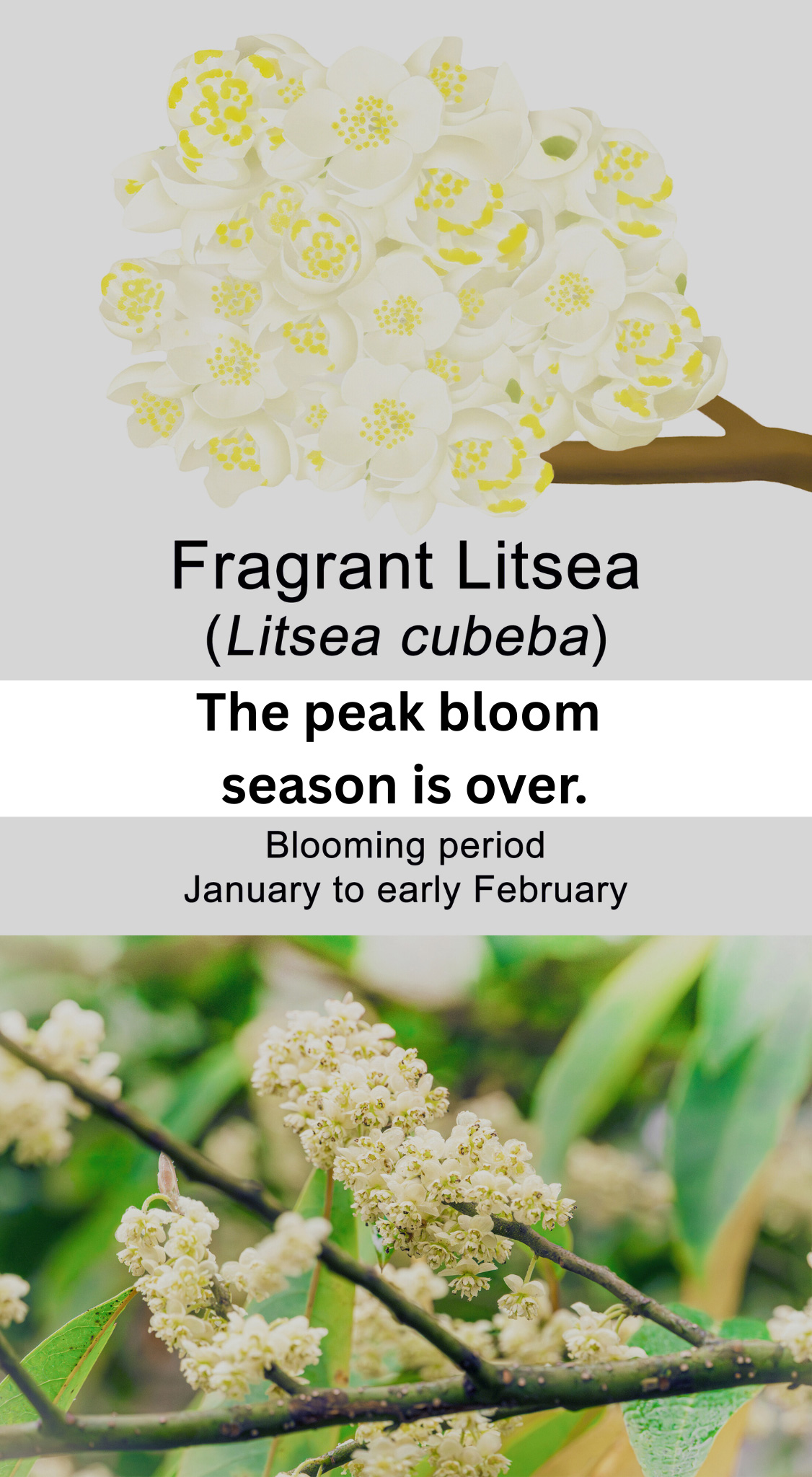
Fragrant Litsea : A Wildly Growing Plant with Its Own Fragrance
Fragrant Litsea (scientific name: Litsea cubebais), a native plant of Hong Kong. It is a small deciduous tree, reaching up to 10 meters tall, with flowers composed of strings of small yellow blossoms. The leaves and fruits of Litsea cubeba carry a fragrance with a fresh ginger aroma. It often attracts bees for collection. During its early spring flowering season, it sheds leaves and produces clusters of pale yellow flowers, which are eye-catching. The traces of the Fragrant Litsea can be found easily in KFBG.
Best Route for Flower Viewing
Flower Viewing Route: Late January to Early February✓ Overlook the northern Hong Kong scenery from the Kadoorie Brothers Memorial Pavilion Δ Reception at Kadoorie Farm & Botanic GardenPurchase tickets for the in-site Shuttle Bus at the reception and alight at the third stop: Orchid Haven. (Click here to check the shuttle bus schedule) Δ Orchid HavenIn addition to appreciating the rare trees in Orchid Haven, also enjoy the protected plant - Rhodoleia (Rhodoleia championii) - and the pink Mume (Prunus mume) located near the entrance of llex Garden.
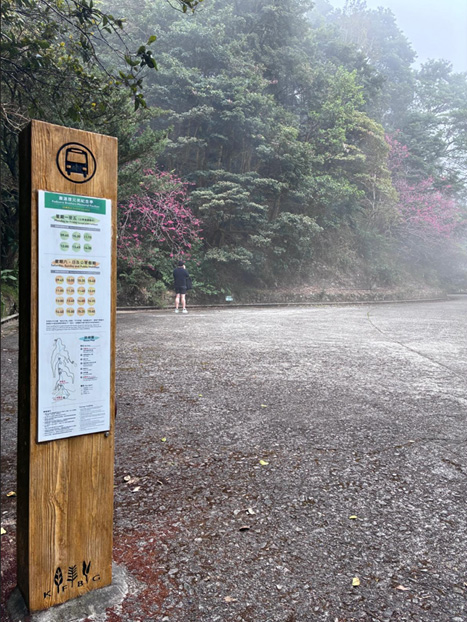
Δ TransportationTake the shuttle bus and alight at the fourth stop: Kadoorie Brothers Memorial Pavilion Station. Admire the Mume (Prunus mume) and Taiwan Cherry (Prunus campanulata) in front of the station.
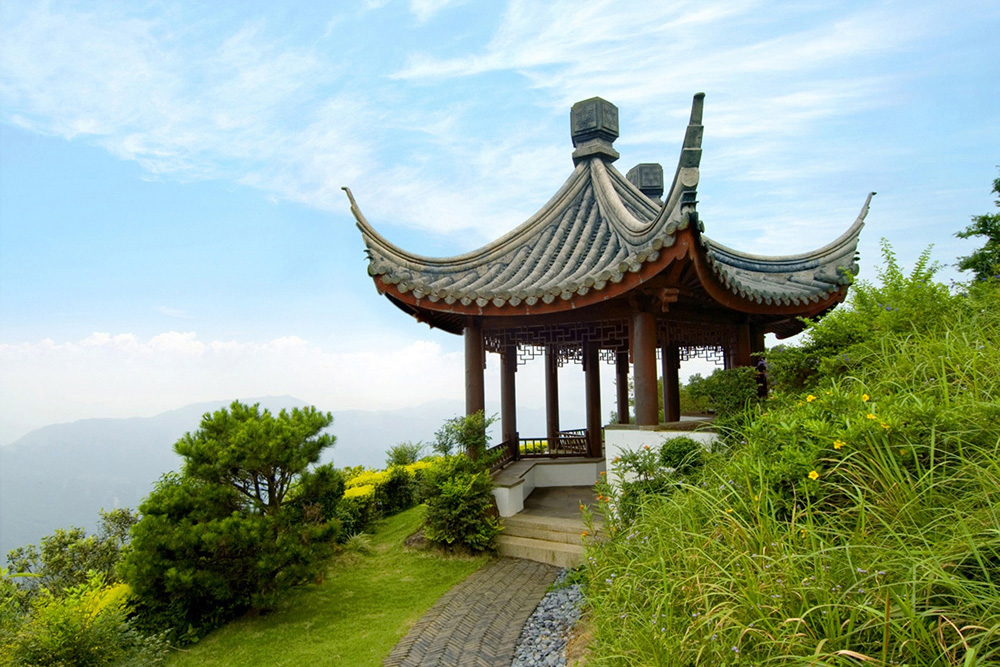
Δ Kadoorie Brothers Memorial Pavilion
Walk for 5 minutes from the station to the Kadoorie Brothers Memorial Pavilion to overlook the northern Hong Kong scenery. During the blooming season, you can also enjoy the Fragrant Litsea (Litsea cubeba) and Taiwan Cherry (Prunus campanulata).
Δ TransportationTake the shuttle bus and alight at the final stop: Jim Ades Raptor Sanctuary Δ Explore at Lower Farm Area
Continue with the Lower farm Eco-Route or visit the Farm Shop to purchase fresh farm products. |
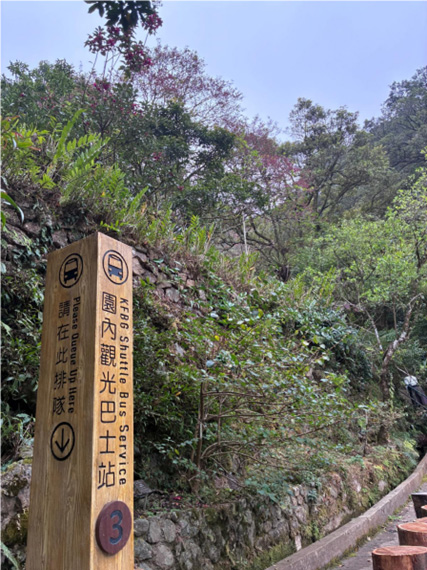
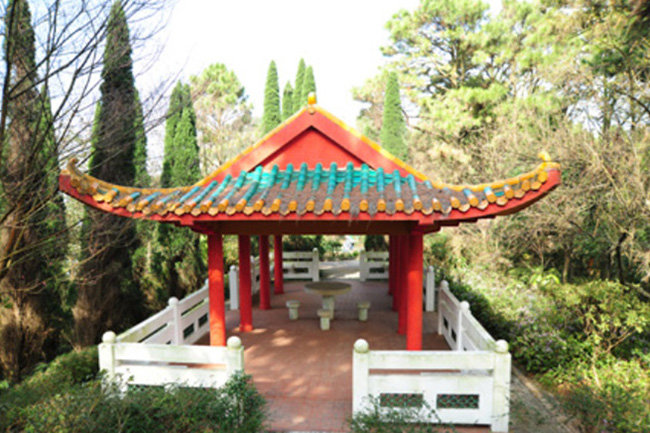
Flower Viewing Route: February✓ Visit T.S.Woo Memorial Pavilion Δ Reception at Kadoorie FarmPurchase tickets for the in-site shuttle bus at the reception and alight at the temporary drop-off point -T.S.Woo Memorial Pavilion station^. Δ T.S.Woo Memorial Pavilion
After you alight, head towards the T.S.Woo Memorial Pavilion. A lovely walkway, lined with Taiwan Cherry (Prunus campanulata) trees will guide your way. Please take your time to enjoy the pavilion and the view.
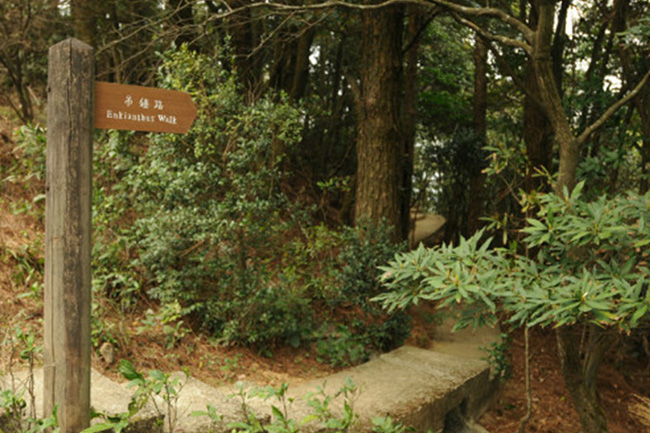
Δ Enkianthus Path
Walk for 5 minutes to the Enkianthus Path to admire the Chinese New Year Flowers (Enkianthus quinqueflorus).
Δ Transportation
Take the shuttle bus at Kwun Yam Shan Station and alight at the final stop: Jim Ades Raptor Sanctuary
Δ Explore at Lower Farm Area
Continue with the Lower farm Eco-Route or visit the Farm Shop to purchase fresh farm products. |

Special Bus Stop for Flower Blooming Period
During the flower blooming period, we have added a special stop at T.S.Woo Memorial Pavilion. This stop is for getting off only. Visitors with shuttle bus tickets and would like to take the shuttle bus to the lower area, please go to the bus stop at Kwun Yum Shan.
Blossom-Viewing Etiquette
When admiring beautiful flowers and plants, please observe the following etiquette to coexist harmoniously with nature, ensuring this beauty remains for every visitor to enjoy.
- Do Not Pick Flowers
- Please do not pick any flowers, fruits, leaves, or seeds. This protects plant growth and ensures that future visitors can enjoy the same scenery.
- Please note: picking or damaging plants in country parks and most natural areas is illegal and is regulated by the Country Parks and Special Areas Regulations and the Forests and Countryside Ordinance. Certain native species, such as the Hong Kong Bellflower, are explicitly protected under Hong Kong Law Chapter 96, the Forests and Countryside Ordinance.
- Do Not Touch
- Many plants are fragile, thorny, or may even contain irritants. Touching can also hinder their growth—please admire from a distance.
- Do Not Shake Trees
- Refrain from shaking branches to create a "flower rain," as this can cause serious harm to the trees.
- Maintain a Peaceful Environment
- Avoid loud noises or using amplification devices. Speak softly so that everyone can enjoy the sounds of birds and the wind, and to avoid disturbing the wildlife that inhabits the area.
- Leave No Trace
- Please take all your trash (including fruit peels and tissues) with you or dispose of it properly in trash bins. Practice "pack it in, pack it out" to help keep the environment clean for everyone.
A place to refuel during your family adventure
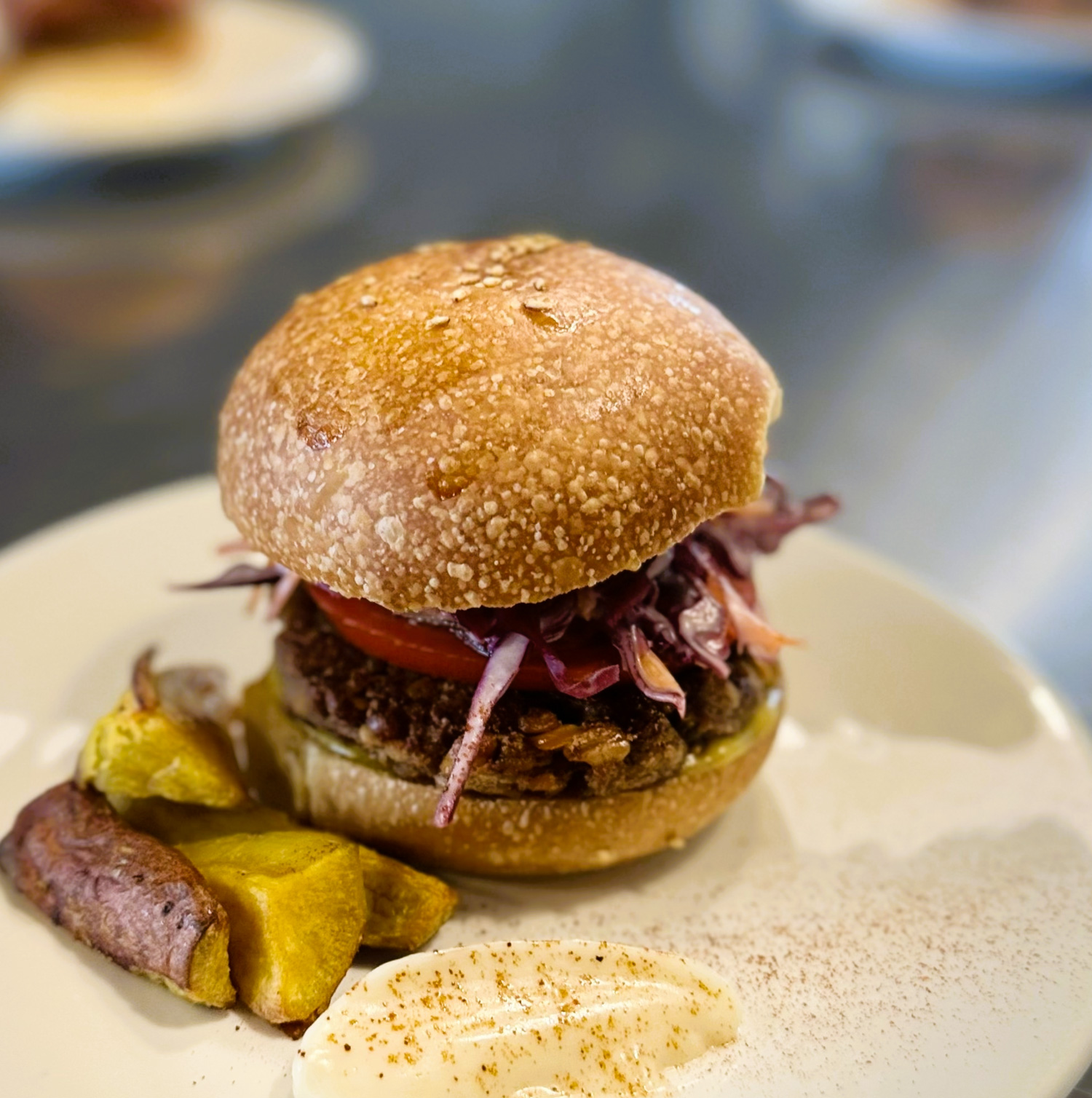
If you feel hungry after exploring the gardens, meeting the animals, or joining activities, Eat Well Café offers a comfortable place to take a break and enjoy a meal during your visit.
Open daily from 10:00 AM to 4:30 PM, Eat Well Café shares the same mission as the Eat Well Canteen at the Green Hub — to deepen your connection with the environment through everyday food experiences. The Café continues the established sustainable practices of the Eat Well Canteen, aiming to minimise the carbon footprint of the meals served while maximising positive social and environmental impact.
Whether it is a family lunch or a short rest between activities, Eat Well Café provides a convenient dining option within Kadoorie Farm and Botanic Garden.
Opening hours: Daily, 10:00 AM – 4:30 PM
 |
 |
 |
 |
Plan Your Holiday Visit
Take note of the details below and share them around— it’s time to plan a fun-filled day with your family at KFBG!
- Admission: Walk-in entry, no reservation and no pre-registration required.
- Opening Hours: 9:30 AM – 5:00 PM daily.
Give your family the gift of nature at KFBG—where conservation, education, and sustainable living come together to inspire harmony between people and the natural world.
- For detailed admission fees table, please visit Visit and Explore - General Information.
- Learn more about public transport and driving routes to KFBG.
Reference
- Greening Gov HK. (n.d.). QR code tree labels- Rhodoleia. https://www.greening.gov.hk/tc/community-outreach/qrcode-tree-labels/index_id_1193.html
- 漁農自然護理署香港濕地公園 [Agriculture, Fisheries and Conservation Department - Hong Kong Wetland Park]. (n.d.). 木薑子 (山蒼樹). Retrieved January 29, 2026, from https://www.wetlandpark.gov.hk/tc/biodiversity/beauty-of-wetlands/wildlife/litsea-cubeba
- Green Power. (2024, November 20). 【歲寒三友・梅】中藥佳品傲風霜 唔止止咳咁簡單 | Chinese plum: The loner that braves the bitter cold. Green Power 綠匯學苑. https://www.greenpower.org.hk/chi-hong-kongs-wild-stars/chinese-plum-the-loner-that-braves-the-bitter-cold
- Kadoorie Farm and Botanic Garden. (2021, March 9). 春日開花逐個數 [Blossom in Spring]. https://www.kfbg.org/tc/KFBG-blog/post/Blossom-in-Spring
- iPlant 植物智. (n.d.). 吊钟花 Enkianthus quinqueflorus. 植物物种信息系统. 检索于 2026年1月29日,来自 https://www.iplant.cn/info/Enkianthus%20quinqueflorus?t=z
- Hong Kong Herbarium. (n.d.). Lysimachia alpestris Champ. ex Benth. Hong Kong Plant Database. Retrieved January 29, 2026, from https://www.herbarium.gov.hk/en/hk-plant-database/plant-detail/index.html?pType=species&oID=5527
- Oasistrek. (无日期). 无声的铃儿|吊钟花. 取自 https://www.oasistrek.com/chinese_new_year_flower.php
- 香港郊野公園 [Hong Kong Country Parks]. (2025年1月19日). 【山上有堆豆豉薑?】[帖子]. Facebook. https://www.facebook.com/hongkongcountryparks/posts/577408801094382/
- The State Key Laboratory of Agrobiotechnology (CUHK). (n.d.). Litsea cubeba. Shiu-Ying Hu Herbarium. Retrieved January 29, 2026, from https://syhuherbarium.sls.cuhk.edu.hk/collections/factsheet/litsea-cubeba/
Notes:
# For details of closing days, please visit Closing Days.